Jewish Religious and Intellectual History
Whether it comes to contemporary Jewish philosophy, cutting-edge theory, Hasidic divrei torah, medieval mysticism, rabbinic thought, or approaches to historical phenomena, I understand and try to convey that these comprise a living, interdisciplinary dialogue of Jews (and non-Jews) thinking and practicing Judaism and Jewishness. I am a big fan of studying primary texts. Gaining first-hand knowledge of and familiarity with the works produced by Jewish thinkers across the centuries easily outdoes second-hand lectures about such works. Since ability to work in the original languages of traditional Jewish texts is critical, each semester I offer a Readings in Medieval and Early Modern Hebrew Texts course. Here we read sources in the original, translating line-by-line, seeking to understand first the basic linguistic level, before we proceed to unpack the meanings of the text and author.
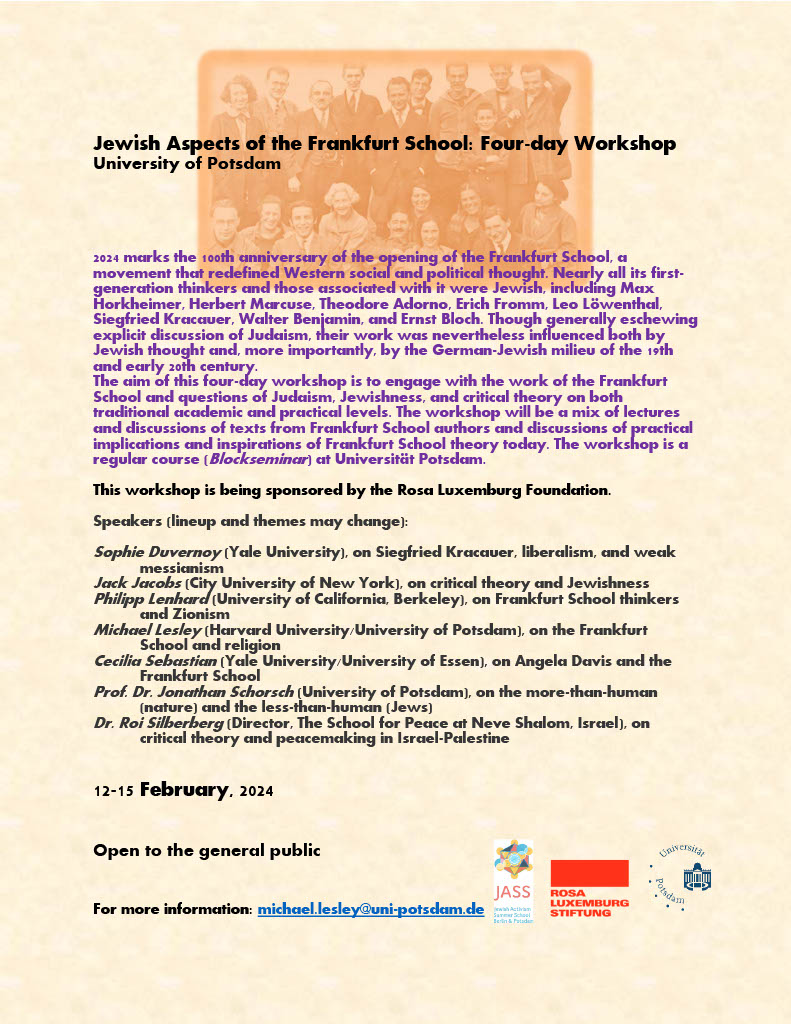
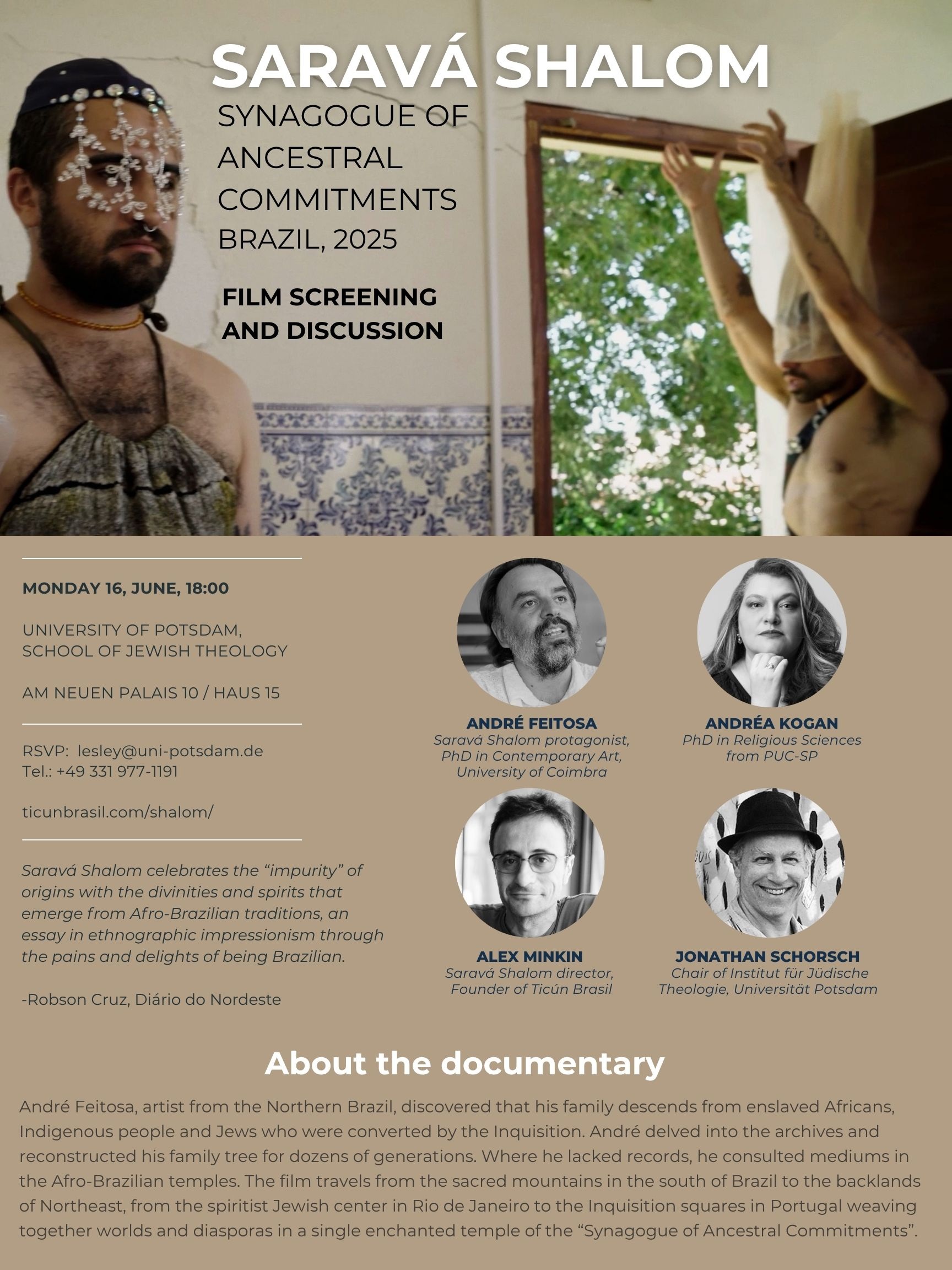
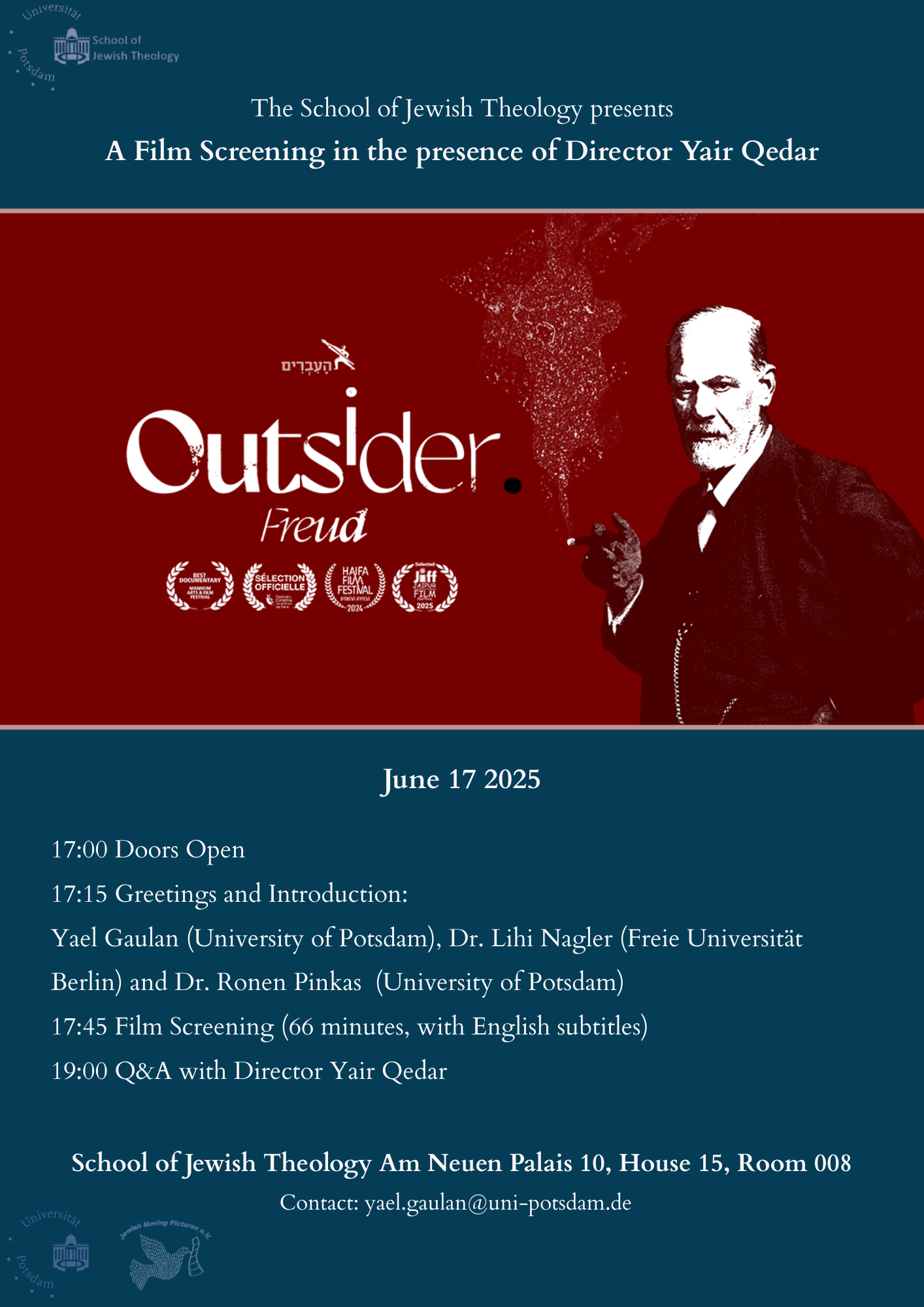
As the current director of the School of Jewish Theology, I seek to foster a vibrant atmosphere for our students and faculty. Guest speakers, academic conferences, film screenings, excursions to sites of local interest enhance our standard curricular activities. Among recent academic conferences that bridge scholarly research with contemporary public debates, we hosted a gathering on Jewish aspects of the Frankfurt School. Last year our Hebrew instructor, Yael Gaulan, ran a film series showing contemporary Israeli films. Presentations by visiting scholars in the past years include one on pilgrimages by non-Jews to Hungarian Hasidic rebbes by Sam Shuman, a screening of a new film on Jewish involvement in Afro-Brazilian syncretic religions followed by discussion with director Alex Minkin, and another screening and discussion with Yair Qedar of his film about Sigmund Freud, The Outsider.
As an extension of my pedagogic mission, in 2017 I founded and still direct the Jewish Activism Summer School(Berlin). We have hosted five programs so far, for participants from around the globe, Jewish as well as non-Jewish. The 2025 cohort alone spanned Argentina, Turkey, India, the US, France, Poland, Belgium, Germany, Israel, the Netherlands, and England. Our sixth edition is scheduled for summer 2026. I see JASS as a kind of technology transfer program for the humanities, taking the best of Jewish Studies and making it available beyond the ivory tower of academia. The course offerings bring into dialogue text study, historical case studies; methods and practice; and Berlin as a living laboratory of effective and innovative organizations, museums, and sites of historical interest. Through the Rahel Varnhagen Reading Circle, JASS hosts irregular gatherings for locals interested in tackling texts and topics related to Jewish identity, politics, and activism, past and present.
Attempting in yet another manner to turn Jewish thought into practice, in 2019 I founded and continue to lead the Green Sabbath Project. The goal is simple: create a mass movement of people who observe a weekly day of rest -- in one fashion or another, whether in traditional religious format or through creative, new-fangled ways –for environmental reasons, as a green ritual practice.
These are some of the ways by which I try to help keep the School of Jewish Theology a dynamic and forward-looking institute.
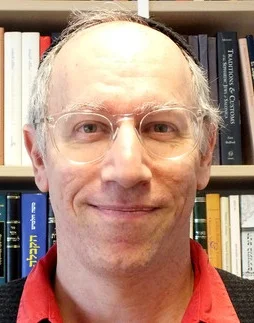
Prof. Dr. Jonathan Schorsch
Campus Am Neuen Palais / building 15, room 2.01
E-Mail: jschorsch(at)uni-potsdam.de
Academic Staff
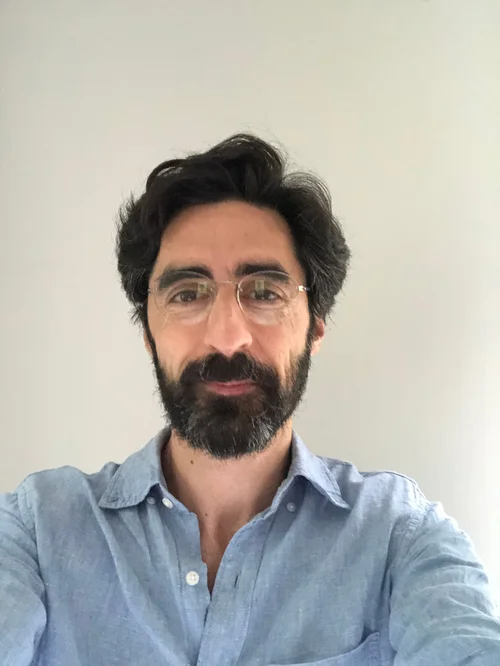
Michael Lesley, M.A.
Campus Am Neuen Palais / Haus 15, Raum 2.06
E-Mail: michael.lesley(at)uni-potsdam.de
Sprechzeiten: Tuesday, 1 - 2 p.m. | please register by mail
Michael Lesley is completing a doctorate at Harvard University on the origins of German philosophical antisemitism in German enlightenment theology.
He has a BA and MA in Jewish Studies from the University of Maryland, College Park, where he worked on Qumran and biblical literature.
His fields of interest include the history of biblical interpretation, the history of liberal religion, German-Jewish history and thought, political theory and religion, and the history of antisemitism.
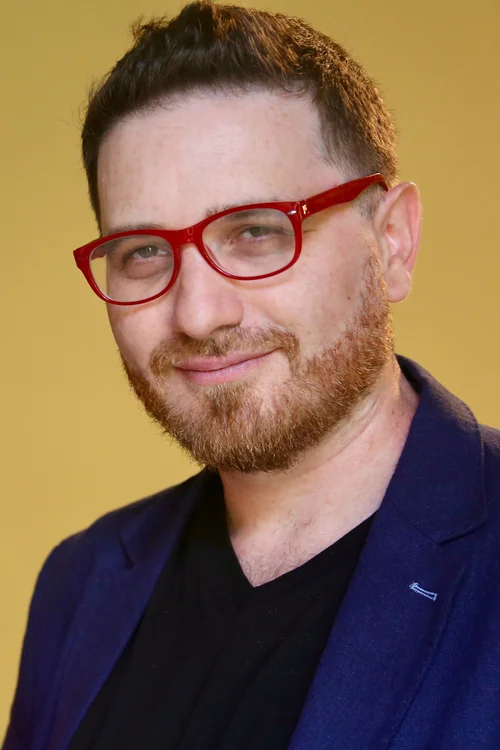
Uriel Aiskovich, M.A.
Campus am Neuen Palais/ House 15/Room 1.06
Email: aiskovich(at)uni-potsdam.de
Consultation hours: on appointement
Responsabilities: JASS-coordination
Uriel Aiskovich is a doctoral candidate at the University of Potsdam investigating the educational potential of digital games for critical thinking, identity formation, and intercultural dialogue in contemporary Jewish education. He also coordinates the Jewish Activism Summer School (JASS).
Assistance to the chair
Heinz Jantzen, M.A.
- Campus Am Neuen Palais
Haus 15, Raum 2.05 - Mo-Wed: all day and by appointement